
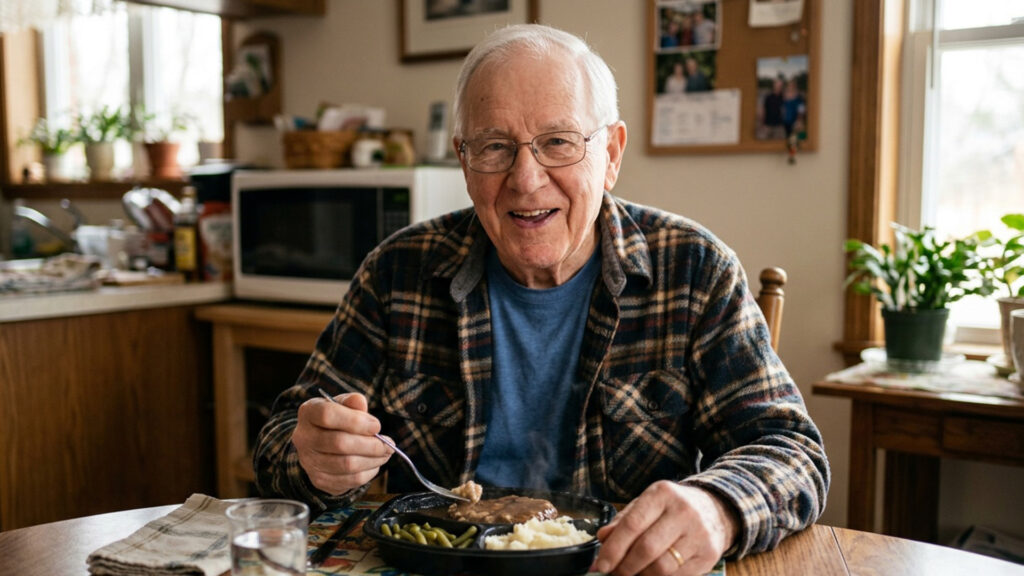
What packaging equipment do Meals on Wheels programs use to seal home-delivered meal trays? Senior nutrition programs — including Meals on Wheels, congregate dining programs, and home-delivered meal services funded through the Older Americans Act — face a packaging challenge unlike any other: meals must be portion-controlled, food-safe, tamper-evident, and presentable when they arrive at a homebound senior’s door, often hours after leaving the production kitchen and after multiple stops on a volunteer delivery route.
AmeriPak tray sealers and horizontal flow wrappers are used by Meals on Wheels programs, Area Agencies on Aging, senior centers, and institutional kitchens supporting home-delivered and congregate senior meal production. The hermetically sealed tray format protects meal quality from kitchen to client, simplifies volunteer handling, and supports the food safety documentation that program administrators and regulators require under Title III-C of the Older Americans Act.
Why are Sealed Tray Packaging Is Essential for Home-Delivered Senior Meals?
Home-delivered meal programs are not restaurant delivery. A Meals on Wheels volunteer may carry 10 to 20 meals on a single route, handling each container multiple times between the central kitchen and the recipient’s door. A meal that leaks, loses its lid in a delivery bag, or arrives visually damaged undermines the program’s purpose — and for many homebound seniors, the daily delivered meal is both nutrition and a meaningful human connection.
The hermetic seal produced by an AmeriPak tray sealer addresses this directly. Once sealed, the meal tray is tamper-evident and leak-resistant through the entire handling chain — loading, transport, route delivery, and home reheating. There is no press-on lid to dislodge in a delivery bag and no cling film to tear during volunteer handling.
Senior nutrition programs operating under USDA Title III-C funding also operate under food safety documentation requirements. Sealed tray packaging supports HACCP compliance and provides a consistent, auditable food safety record from production through delivery that open-tray service cannot provide.
Senior Nutrition and Meals on Wheels Packaging Applications
Home-Delivered Meal Tray Sealing — Meals on Wheels and OAA Title III-C Programs
Central production kitchens pre-fill compartmentalized meal trays with a hot entree, vegetables, starch, and a fruit or dessert portion, then seal them on the Series 30 or Series 60 tray sealer with a clear or printed lidding film. The hermetically sealed trays are loaded into insulated delivery bags and distributed by volunteer drivers on their routes.
The Series 30’s compact, mobile footprint is ideal for smaller program kitchens and community-based production spaces. Its lockable casters and operator-friendly controls support efficient production with volunteer or part-time kitchen staff — the standard staffing model for most local Meals on Wheels affiliates. For larger programs or regional production kitchens supplying multiple delivery hubs, the Series 60’s multi-lane configuration delivers the throughput needed to seal several hundred to over a thousand trays per service period.
Frozen Meal Inventory for Senior Nutrition Emergency Programs
Some senior nutrition programs produce and freeze meal trays in advance to buffer against volunteer shortages, weather events, or surge demand during holidays and emergencies. AmeriPak tray sealers using C-PET trays and barrier lidding films produce freeze-and-reheat-compatible sealed meals that clients can store in a home freezer for days or weeks. The hermetic seal prevents freezer burn and maintains meal appearance through freeze-thaw cycles — and C-PET trays go directly from freezer to microwave or conventional oven without warping or releasing harmful compounds.
Congregate Dining Site Meal Packaging
Senior centers, adult day programs, and congregate dining sites receive pre-sealed meal trays from a central production kitchen and serve on-site with minimal re-plating or holding equipment. The sealed tray protects meal quality and presentation during transport from production kitchen to the dining site. In reheating-capable tray formats (C-PET), meals arrive ready to warm and serve — reducing equipment and labor requirements at individual sites across a service area.
Weekend Meal Packs and Supplemental Grab-and-Go Items
Weekend meal programs, emergency food boxes, and supplemental nutrition packs for senior clients include individually wrapped items — sandwiches, fruit, crackers, and snacks — that are flow-wrapped on the Series 90 or Series 150. Flow-wrapped items are easy for seniors to open, maintain freshness through multi-day distribution cycles, and can carry printed film labels with dietary information, heating instructions, or program identification.
Special Diet and Therapeutic Meal Packaging
Senior nutrition programs serve a population with a high prevalence of diet-specific medical requirements: diabetic, low-sodium, renal, pureed, and texture-modified diets are standard in any mature Meals on Wheels operation. Pre-labeling special diet trays at the point of sealing — using printed lidding film or labels applied before the seal — is operationally cleaner and more defensible than managing special diet distribution during loading or delivery, where errors are harder to prevent and harder to document. Each sealed tray is identifiable and traceable from production through delivery.
Which AmeriPak Equipment Is Right for Senior Nutrition Programs?
Series 30 Tray Sealer — Best for Local Meals on Wheels Programs and Smaller Production Kitchens
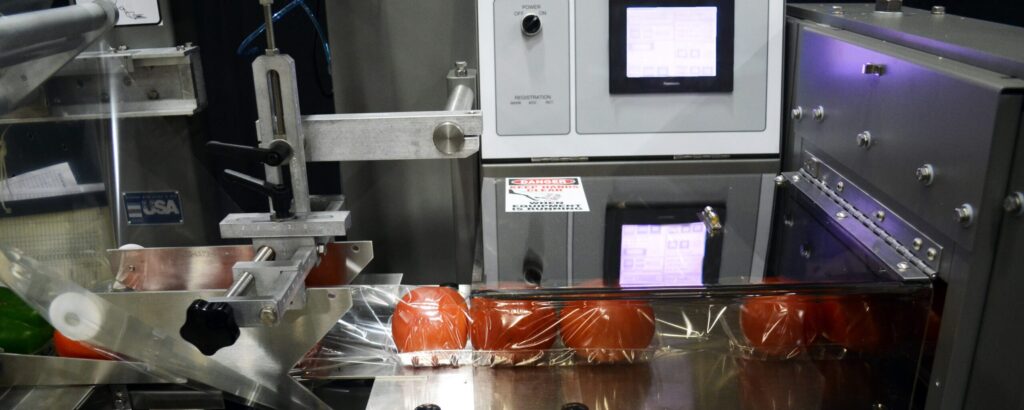
The primary equipment choice for small-to-mid-size Meals on Wheels programs, Area Agency on Aging kitchens, and senior center production operations. Compact and mobile with lockable casters, the Series 30 fits shared kitchen environments and supports volunteer staff. Produces reliable hermetic seals at the production volumes typical of community-based senior nutrition programs.
Series 60 Tray Sealer — Best for Regional Programs and High-Volume Senior Meal Production
Multi-lane configuration for larger senior nutrition programs, regional production kitchens, and multi-site operations producing hundreds to thousands of sealed meal trays per service period. Handles a wide range of tray sizes and compartment configurations, including divided entree trays and specialized diet-specific formats.
Series 90/ Series 150 Horizontal Flow Wrapper — Best for Supplemental and Weekend Meal Items
Individual item wrapping for sandwiches, snack packs, supplemental items, and grab-and-go meal components. Handles polypropylene and poly/nylon films with printed graphics for dietary labeling and program identification. Well-suited for weekend meal programs, emergency food box production, and supplemental nutrition item packaging.
Frequently Asked Questions — Senior Nutrition and Meals on Wheels Packaging Equipment
What meal tray material is best for seniors who will reheat food at home in a microwave?
C-PET (crystallized polyethylene terephthalate) is the right tray material when meals will be reheated directly in the container — whether in a microwave or conventional oven. C-PET withstands temperatures from below freezing to approximately 400 degrees Fahrenheit without warping. APET trays are appropriate for cold-served meals or meals that will be transferred to a separate container before reheating. Specify your reheating method to AmeriPak engineers when selecting tray and film materials — this is a critical compatibility decision.
Our Meals on Wheels kitchen has very limited space. Will a tray sealer fit?
The Series 30 is specifically designed for compact kitchen environments. Its small footprint and lockable casters make it well-suited for programs that share kitchen space with other operations or need to reposition equipment between production and other uses. Contact AmeriPak at 215-792-7272 with your kitchen dimensions and daily meal count to confirm the right configuration.
How does a sealed tray program handle special diet meals — diabetic, low-sodium, pureed — for senior clients?
Special diet meals are pre-labeled and segregated at the point of production, before they enter the distribution chain. Using printed or pre-labeled lidding film, each tray is identified and sealed with its dietary designation at the production stage. This is operationally more reliable and more auditable than managing special diet identification during loading or delivery, where errors are harder to prevent and harder to document — and harder to defend during a program review.
Can Meals on Wheels programs source their own trays and film, or do they have to buy from AmeriPak?
AmeriPak requires no proprietary film or tray purchasing contracts. Programs source trays and lidding film from any preferred vendor — which is especially important for programs operating under OAA grant funding that requires competitive procurement practices. AmeriPak engineers can recommend compatible materials for your specific meal format and reheating requirements.
Our program runs with volunteer kitchen staff who have no industrial equipment experience. Is the equipment easy to operate?
Yes. AmeriPak tray sealers are built with operator-friendly controls designed for facilities with rotating and non-specialized staff. The Series 30 is straightforward to operate with basic training — a deliberate design feature that reflects the realities of community-based food service environments where the production team changes frequently. AmeriPak provides setup and operational support to help programs get up and running quickly.
What is the minimum production volume that justifies a tray sealer for a senior feeding program?
The Series 30 is appropriate for programs producing from a few dozen to several hundred sealed trays per service period. If your program currently uses press-on lids, cling film, or open trays for home-delivered meals, a tray sealer will improve meal quality, eliminate delivery spills, and produce a more professional presentation from day one. Contact AmeriPak to discuss your daily meal count — they can determine whether the equipment fits your current volume and how the investment scales as your program grows.
Ready to solve your packaging challenge? Use our Contact Page or Call AmeriPak at 215-792-7272 – Tray sealers, flow wrappers, and shrink wrappers — made in the USA in Warminster, PA.