

What packaging equipment do meal prep and meal delivery companies use to seal individual meal trays for direct-to-consumer shipment? The prepared foods and meal delivery sector is one of the fastest-growing food segments — and one of the most demanding from a packaging standpoint. Meal prep companies, meal kit subscription services, ghost kitchens, and catering operations need packaging that survives cold-chain shipping, maintains portion integrity, communicates brand quality, and accommodates menus that change weekly or daily.
AmeriPak tray sealers and horizontal flow wrappers serve meal prep brands from emerging direct-to-consumer startups to large-scale catering operations producing thousands of meals per day. The compact Series 30 has become a workhorse in ghost kitchen environments where production rotates between multiple brands and menus from a single facility.
Why is Packaging Equipment a Critical Variable in Meal Delivery?
A meal that arrives damaged, leaked, or poorly presented does more than waste food — it damages a brand’s reputation with the customer who received it. Cold-chain delivery subjects packaging to temperature swings, compression in shipping cartons, and rough handling at distribution points. The seal on a meal tray must hold through all of it.
Menu flexibility is equally critical. Meal prep operations change their offerings constantly in response to dietary trends, seasonal ingredients, and subscription preferences. Equipment that requires long changeovers for each new tray size or film specification is a production bottleneck that directly limits menu agility. Quick-change tooling and wide film compatibility are essential features for this industry.
Prepared Foods, Meal Prep, and Meal Kit Delivery Packaging
Applications
Ready-to-Eat Meal Tray Sealing for Direct-to-Consumer Delivery
Meal prep and meal delivery companies fill CPET or APET divided trays with portioned meals and run them through AmeriPak tray sealers. The clear lidding film hermetically seals each tray for cold-chain delivery. CPET trays handle both refrigerated storage and microwave reheating without warping — an important material consideration for any meal format where consumers reheat in the container.
The Series 30 is ideal for emerging meal prep brands with moderate production volumes and frequent menu changes. The Series 60 serves larger operations that need multi-lane throughput or are running multiple meal SKUs simultaneously.
Individually Wrapped Entrees and Sides
Burritos, stuffed peppers, grain bowls, and other formed meal components are individually flow-wrapped on the Series 90 or 150. The fin seal wrap maintains freshness, prevents cross-contamination between components, and provides a full surface for brand labeling and heating instructions — critical for meal delivery brands competing on presentation quality.
Meal Kit Component Overwrapping
For meal kit companies assembling bags of raw ingredients, individual components — proteins, sauces, seasoning packets, fresh vegetables — are flow-wrapped on the Series 90 or 150 before being placed in the outer shipper. Individual wrapping prevents moisture transfer between components, contains leaks from proteins or sauces, and ensures each element arrives in the condition the recipe assumes.
Catering and Event Food Production
High-volume catering operations producing hundreds or thousands of individual meals use AmeriPak tray sealers to package plated meals for transport to events, stadiums, corporate clients, or airline catering. The sealed tray format ensures portion integrity, temperature retention, and professional presentation when trays are opened at the service point.
Ghost Kitchen and Cloud Kitchen Operations
Ghost kitchens producing multiple restaurant brands from a single facility use the compact Series 30 tray sealer — its small footprint and lockable casters allow repositioning within the kitchen as production rotates between brands and menus throughout the day. No proprietary consumable contracts mean ghost kitchen operators can source trays and film that fit each brand’s packaging aesthetic independently.
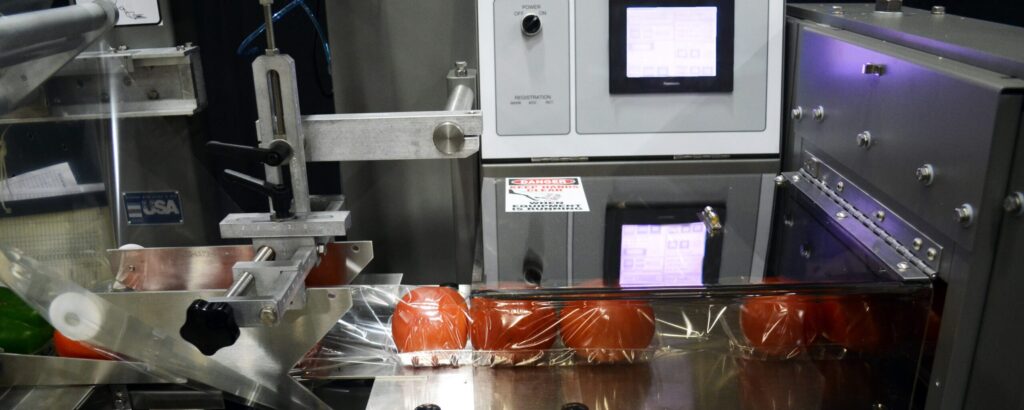
Which AmeriPak Equipment Is Right for Prepared Foods, Meal Prep, and Meal Delivery?
Series 30 Tray Sealer — Best for Meal Prep Startups, Ghost Kitchens, and Catering
Compact, mobile, operator-friendly. Ideal for meal prep brands scaling up, ghost kitchens with rotating menus, and catering operations with moderate volumes and frequent format changes. Lockable casters for repositioning within a shared kitchen environment.
Series 60 Tray Sealer — Best for Established Meal Delivery Operations and Multi-SKU Production
Multi-lane, higher throughput. For established meal delivery operations, large catering companies, and meal kit services running multiple SKUs simultaneously at commercial production volumes.
Series 90 / Series 150 Horizontal Flow Wrapper — Best for Individual Entree and Component Wrapping
Individual entree and kit component wrapping. Handles burritos, grain bowls, sauce pouches, and raw protein portions. Wide film compatibility for printed brand packaging and custom-registered graphics.
Frequently Asked Questions — Prepared Foods, Meal Prep, and Meal Delivery Packaging Equipment
What is the difference between CPET and APET meal trays, and which is right for meal delivery?
CPET (crystallized polyethylene terephthalate) trays withstand both freezing and oven or microwave reheating — the right choice for meals that consumers reheat directly in the container. APET trays are clear, lightweight, and ideal for refrigerated meals viewed through the film lid, but are not designed for high-temperature reheating. If your customers microwave meals in the tray, CPET is the right material.
Can meal delivery brands use custom-printed film with their brand artwork on AmeriPak equipment?
Yes. AmeriPak flow wrappers and tray sealers are compatible with custom-printed films from any film supplier — there are no proprietary film contracts. Adjustable film registration on the flow wrappers ensures printed graphics align consistently across every package on the production run.
Our meal prep menu changes weekly. How long does a changeover take when we switch tray sizes?
AmeriPak equipment is designed for quick, tool-free changeovers. Most operators switch tray formats in minutes, not hours. This is specifically why meal prep operations and ghost kitchens favor this equipment — it does not penalize menu flexibility with production downtime.
We are a small meal prep brand just starting out. Is this equipment appropriate for our production volume?
The Series 30 is specifically well-suited for emerging meal prep brands and moderate production volumes. It delivers professional-quality hermetic seals without the capital cost or operational complexity of large industrial systems. As volume grows, you can add a Series 60 or additional Series 30 units without replacing existing equipment.
Ready to solve your packaging challenge? Use our Contact Page or Call AmeriPak at 215-792-7272 – Tray sealers, flow wrappers, and shrink wrappers — made in the USA in Warminster, PA.